Paper on Analysing “the Sequential Organization of Social Interaction in Exhibitions” #emca #video #sociology #museum

Ethnomethodology, interaction, interaction, interactionism, museums, publication, research methods, Uncategorized

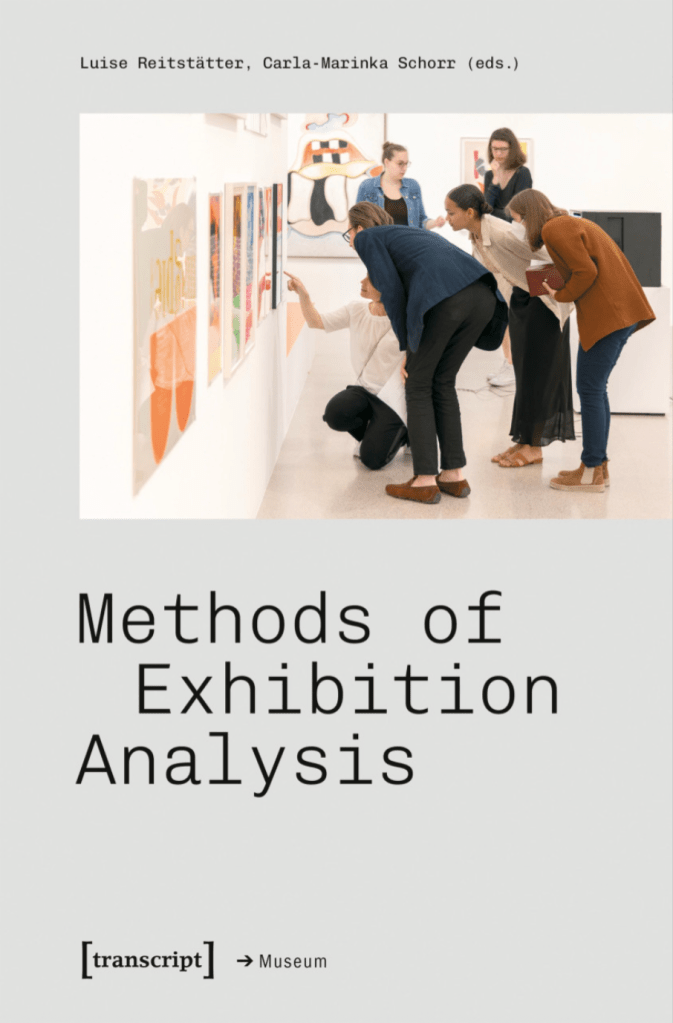
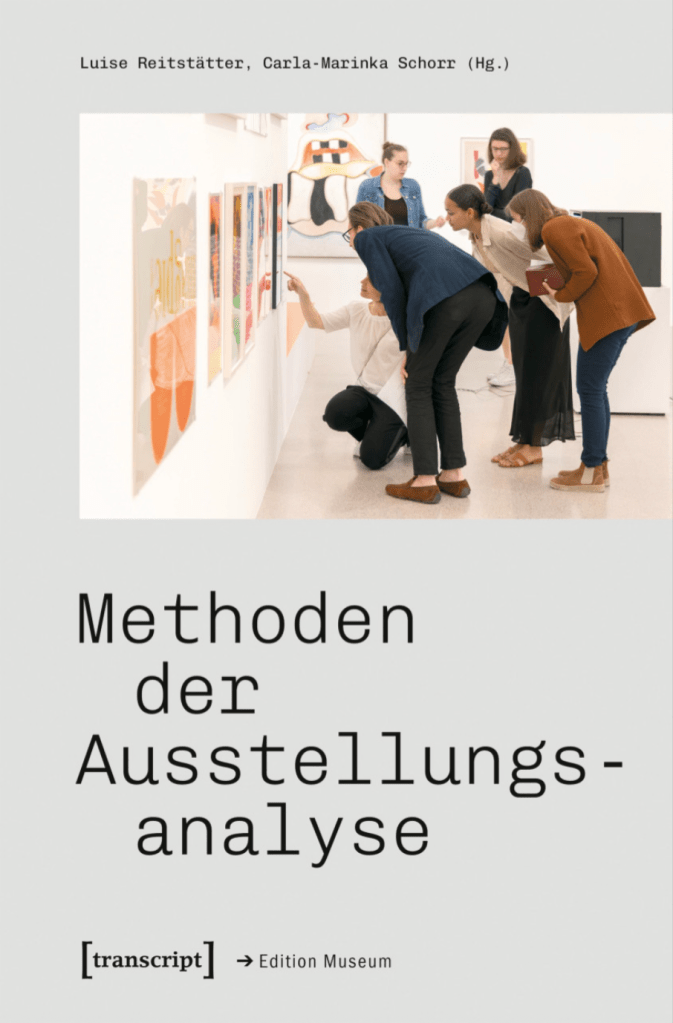
Luise Reitstätter and Carla-Marinka Schorr have published an excellent edited collection titled “Methods of Exhibition Analysis” (open access, in English and German) that showcases a wide range of research methods used to investigate visitors’ experience of exhibits and exhibitions. All the chapters are structured in very similar ways, making it easy for readers, academics and practitioners alike, to compare and contrast the opportunities and challenges of different methods.

I have a short chapter in the book titled “Video-Based Ethnomethodological Conversation Analysis. Capturing the sequential organization of social interaction in exhibitions” the discusses how to collect and analyse video-recorded interaction in museums.

New Paper: “Social interaction and dark tourism in prison museums” by Rachael Ironside, Brianna Wyatt, Craig Wight, Alona Roitershtein, Dirk vom Lehn

Ethnomethodology, exhibitions, experience, interaction, interaction, interactionism, museums, public places, publication, Uncategorized

This study explores how prison tourism experiences are co-constructed through situated visitor interactions. Penal heritage sites are decommissioned prisons, transformed into immersive educational attractions, drawing upon multiple interpretative practices to engage visitors with historic and contemporary issues of crime and punishment. Using ethnomethodological conversation analysis (EMCA), this research examines how gestures, talk, gaze and bodily position influence how visitors see, interpret, and emotionally negotiate difficult heritage. Findings reveal that visitors co-produce dark tourism experiences and negotiate the perceived darkness of sites through embodied practice. Situating visitors as active social agents, this study provides insights into the co-construction of dark tourism experiences, emphasising interpretation as an emergent process shaped by interaction rather than predetermined by site design or individual motivation.

New research suggests people make sense of disturbing places together, not alone

New Paper: “Reframing art online through collective meaning-making” by Linh D. Nguyen, C. Preece, and D. vom Lehn #art #museum #interaction #marketing #sociology #emca #sssi #OA https://doi.org/10.1080/0267257X.2023.2274486

aesthetics, art, Ethnomethodology, experience, interaction, interactionism, museums, publication, sociology, Videoanalysis, visitors

Reframing art online through collective meaning-making

Linh Dan NguyenChloe Preece & Dirk Vom Lehn

Book Chapter with Brigitte Biehl (@doktordrama): “Atmospheres as dynamic configurations: The case of a museum and a techno club” #sociology #marketing #emca #museums #technoclub #berghain #StudioBerlin

Announcement, dramaturgical, exhibitions, experience, interaction

Brigitte Biehl and I have continued our exploration of “atmospheres” by examining how spaces and their atmospheres are dynamically produced through people’s action and interaction. Our analysis is based on studies at a museum and a techno club that due to the global pandemic was transformed into an art exhibition. The research was published in the book “The Metamorphosis of Cultural and Creative Organizations” edited by Federica De Molli and Marilena Secco.

Atmospheres as dynamic configurations: The case of a museum and a techno club by Brigitte Biehl & Dirk vom Lehn

Abstract: Organizational spaces and museum exhibitions are often designed to encompass people with a given atmosphere that encourage particular behavioural and cognitive responses. In a leisure context such as techno clubs, people are given the opportunity to have experiences that are site-specific standing in a particular a nightlife tradition. Similarly, in museums people encounter objects and artefacts displayed to allow them to have an aesthetic experience. In our chapter, we will draw on Gernot Böhme’s aesthetic theory, developing his notion of atmosphere and aesthetic work. We explore how spaces and their atmospheres are dynamically produced through people’s action and interaction. Our investigation will consider atmospheres as ongoing, as continually produced and transformed through people’s “aesthetic work”, i.e. actions, movements, and embodied interaction influenced by their moods, emotions and energy, as well as their memories and past experiences. Based on our analysis we will argue that leisure and cultural experiences arise within the spaces and atmosphere that people co-create through their presence and activities. We draw on examples from the cultural and creative industries: the Victoria and Albert Museum in London and Berghain techno club in Berlin, which during the global pandemic in 2020 was transformed into an art exhibition “Studio Berlin” in co-operation with Boros art foundation.

Table of Contents

Preface Antonio Strati 

1. Cultural and creative organizations’ space: An introduction 

Federica De Molli and Marilena Vecco 

Part I – Aesthetic 

2. Atmosphere in cultural organisations: A circumplex model of affective atmospheres 

Christian Julmi 

3. Atmospheres as dynamic configurations: The case of a museum and a techno club 

Brigitte Biehl (Biehl-Missal) and Dirk vom Lehn 

4. Creative spaces in higher education 

Tatiana Chemi

5. ‘Being t/here apart-together’: Co-creative work(ing) in bodily-digital ‘inter-places’ 

Wendelin Küpers and Stephan Sonnenburg 

Part II – Symbolic 

6. Organizational spatial transformation: The case of the un-festival 

Grant Hall and Ruth Rentschler

7. The spatial production of festivals: Ritualization, liminality and performativity 

Leonore van den Ende 

8. Artistic space: Painting and the making of space 

Eleonora Montagner and Alvise Favotto 

9. Museum spaces and changes 

Graham Black 

Part III – Instrumental 

10. Space technologies and cultural organizations 

Daniel Ericsson 

11. The regional context in entrepreneurial finance of cultural business: Urban versus rural space for creative and cultural entrepreneurship 

Elmar D. Konrad and Max Höllen 

12. Community-driven cultural spaces and the COVID-19 pandemic 

Matina Magkou, Laura Huret and Vincent Lambert

13. The expansion of virtual spaces of superstar and star museums during the COVID-19 lockdown 

Anne Gombault and Oihab Allal-Cherif 

14. Future perspectives for research on creative and cultural sectors using a spatial approach 

Federica De Molli

“The Routledge International Handbook of New Digital Practices in Galleries, Libraries, Archives, Museums and Heritage Sites” edited by Hannah Lewi, Wally Smith, Dirk vom Lehn, & Steve Cooke #TOC #museums #technology #design #digitalization #interactivity

Announcement, Books, exhibitions, interaction, interactivity, interactivity, museums, Museums, Technology, Technology, visitors

#digitalization #experience #interaction #interactivity #museums #participation #technology 

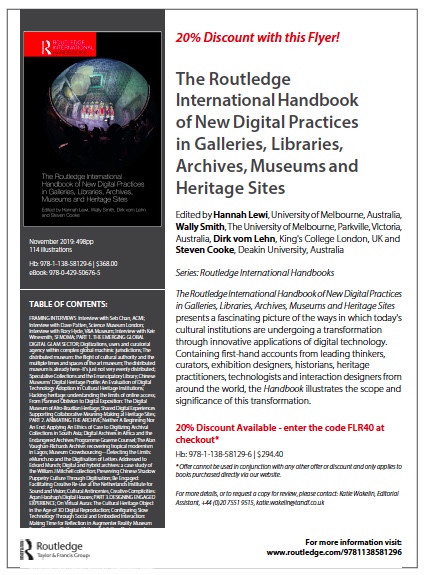
The publication of “The Routledge International Handbook of New Digital Practices in Galleries, Libraries, Archives, Museums and Heritage Sites” edited by Hannah Lewi, Wally Smith, Dirk vom Lehn, & Steve Cooke has been announced for November 15th, 2019. The book includes interviews by Seb Chan (ACMI), Dave Patten (Science Museum London), Rory Hyde (Victoria & Albert Museum, London), and Keir Winesmith (SFMOMA) as well as chapters covering four broad themes: “THE EMERGING GLOBAL DIGITAL GLAM SECTOR”, “ANIMATING THE ARCHIVE”, “DESIGNING ENGAGED EXPERIENCE”, and “LOCATING IN PLACE”.

More information about the Handbook can be accessed on the publisher’s website by clicking the image below (apologies for the steep price!).

41Au7tyvoTL GLAM 

New Practices in Digital Media design in Galleries, Libraries, Archives, Museums and Heritage Sites Hannah Lewi, Wally Smith, Steven Cooke, Dirk vom Lehn
 

FRAMING INTERVIEWS

Interview with Seb Chan, ACMI Seb Chan, Hannah Lewi and Wally Smith
Interview with Dave Patten, Science Museum London David Patten, Dirk vom Lehn and Wally Smith
Interview with Rory Hyde, V&A Museum Rory Hyde, Dirk vom Lehn and Wally Smith
Interview with Keir Winesmith, SFMOMA Keir Winesmith, Hannah Lewi and Wally Smith
 

PART 1. THE EMERGING GLOBAL DIGITAL GLAM SECTOR

Digitizations, users and curatorial agency within complex global machinic jurisdictions Fiona Cameron
The distributed museum: the flight of cultural authority and the multiple times and spaces of the art museum Andrew Dewdney
The distributed museum is already here–it’s just not very evenly distributed Ed Rodley
Speculative Collections and the Emancipatory Library Bethany Nowviskie
Chinese Museums’ Digital Heritage Profile: An Evaluation of Digital Technology Adoption in Cultural Heritage Institutions Andrew White and Eugene Ch’ng
Hacking heritage: understanding the limits of online access Tim Sherratt
From Planned Oblivion to Digital Exposition: The Digital Museum of Afro-Brazilian Heritage Livio Sansone
Shared  Digital  Experiences Supporting  Collaborative    Meaning-Making  at  Heritage  Sites Sara  Perry,  Maria  Roussou,  Sophia  S.  Mirashrafi,  Akrivi  Katifori,  and  Sierra  McKinney
 

PART 2. ANIMATING THE ARCHIVE

Neither A Beginning Nor An End: Applying An Ethics of Care to Digitizing Archival Collections in South Asia Michelle Caswell and Marika Cifor
Digital Archives in Africa and the Endangered Archives Programme Graeme Counsel
The Alan Vaughan-Richards Archive: recovering tropical modernism in Lagos. Ola Uduku
Museum Crowdsourcing—Detecting the Limits: eMunch.no and the Digitisation of Letters Addressed to Edvard Munch Joanna Iranowska
Digital and hybrid archives: a case study of the William J Mitchell collection Thomas Kvan, Peter Neish and Naomi Mullumby
Preserving Chinese Shadow Puppetry Culture Through Digitisation Tin-Kai Chen
Be Engaged: Facilitating Creative Re-use at the Netherlands Institute for Sound and Vision Gregory Markus, Maarten Brinkerink, Brigitte Jansen
Cultural Antinomies, Creative Complicities: Agan Harahap’s Digital Hoaxes Alexandra Moschovi and Alexander Supartono
 

PART 3. DESIGNING ENGAGED EXPERIENCE

On Virtual Auras: The Cultural Heritage Object in the Age of 3D Digital Reproduction John Hindmarch, Melissa Terras and Steve Robson
Configuring Slow Technology Through Social and Embodied Interaction: Making Time for Reflection in Augmented Reality Museum Experiences with Young Visitors Areti Galani and Rachel Clarke
Exhibition Design and Professional Theories: the Development of an Astronomy Exhibition Dirk vom Lehn, Kate Sang, Richard Glassborow and Louise King
Meeting the Challenge of the Immoveable: Experiencing Mogao Grottoes Cave 45 With Immersive Technology Jeffrey Levin, Robert, Checchi, Lori Wong, Garson Yu and Edwin Baker
Immersive Engagement: Designing and Testing a Virtual Indian Residential School Exhibition Adam Muller
Hemispheres: transdisciplinary architectures and museum-university collaboration Sarah Kenderdine
Human-Centred Design in Digital Media Indigo Hanlee
Unlocking the Glass Case Peter Higgins
The law of feeling: experiments in a Yolngu museology Paul Gurrumuruway and Jennifer Deger
Henry VR: designing affect-oriented virtual reality exhibitions for art museums Paula Dredge, Anne Gerard-Austin, Simon Ives and Andrew Yip
Website as publishing platform Tim Jones and David Simpson
From Shelf to Web: First Reflections on the O’Donnell Marginalia Project Julia Kuehns
Interpreting the Future Tony Holzner
 

PART 4. LOCATING IN PLACE

What Could Have Bean? A Digital Construction of Charles Bean’s Australian War Memorial Anthea Gunn
Succession: A Generative Approach to Digital Collections Mitchell Whitelaw
Rephotography and the Situating of Then-and-Now Hannah Lewi and Andrew Murray
Hospicio Cabañas: Seeing World Heritage Through Google’s Eyes Cristina Garduno Freeman
The Experience of Using Digital Walking Tours to Explore Urban Histories Wally Smith, Dirk vom Lehn, Hannah Lewi, Katie Best and Dora Constantinidis
Traces—Olion: Creating a Bilingual ‘Subtlemob’ for National Museum Wales Sara Huws, Alison John, Jenny Kidd
Investigating ‘Ordinary’ Landscapes: Using Visual Research Methods to Understand Heritage Digital Technologies and Sense of Place Steven Cooke and Dora Constantinidis
Massive Digital Community Archives in Colombia: An International Partnership Towards Peace Diego Merizalde and Jon Voss
Mapping an Archive of Emotions: Place, Memory and the Affective Histories of Perth’s Riverscape Alicia Marchant

Afterword

Andrea Witcomb

#digitalization #experience #interaction #interactivity #museums #participation

Forthcoming “The Routledge International Handbook of New Digital Practices in Galleries, Libraries, Archives, Museums and Heritage Sites” edited by Hannah Lewi, Wally Smith, Dirk vom Lehn, & Steve Cooke #museums #technology #design #digitalization #interactivity

Announcement, book, interaction, interactivity, museums, Museums, Technology

#digitalization #experience #interaction #interactivity #museums #participation #technology 

The publication of “The Routledge International Handbook of New Digital Practices in Galleries, Libraries, Archives, Museums and Heritage Sites” edited by Hannah Lewi, Wally Smith, Dirk vom Lehn, & Steve Cooke has been announced for November 15th, 2019. The book includes interviews by Seb Chan (ACMI), Dave Patten (Science Museum London), Rory Hyde (Victoria & Albert Museum, London), and Keir Winesmith (SFMOMA) as well as chapters covering four broad themes: “THE EMERGING GLOBAL DIGITAL GLAM SECTOR”, “ANIMATING THE ARCHIVE”, “DESIGNING ENGAGED EXPERIENCE”, and “LOCATING IN PLACE”.

More information about the Handbook can be accessed on the publisher’s website by clicking the image below (apologies for the steep price!).

41Au7tyvoTL

New Practices in Digital Media design in Galleries, Libraries, Archives, Museums and Heritage Sites Hannah Lewi, Wally Smith, Steven Cooke, Dirk vom Lehn
 

FRAMING INTERVIEWS

Interview with Seb Chan, ACMI Seb Chan, Hannah Lewi and Wally Smith
Interview with Dave Patten, Science Museum London David Patten, Dirk vom Lehn and Wally Smith
Interview with Rory Hyde, V&A Museum Rory Hyde, Dirk vom Lehn and Wally Smith
Interview with Keir Winesmith, SFMOMA Keir Winesmith, Hannah Lewi and Wally Smith
 

PART 1. THE EMERGING GLOBAL DIGITAL GLAM SECTOR

Digitizations, users and curatorial agency within complex global machinic jurisdictions Fiona Cameron
The distributed museum: the flight of cultural authority and the multiple times and spaces of the art museum Andrew Dewdney
The distributed museum is already here–it’s just not very evenly distributed Ed Rodley
Speculative Collections and the Emancipatory Library Bethany Nowviskie
Chinese Museums’ Digital Heritage Profile: An Evaluation of Digital Technology Adoption in Cultural Heritage Institutions Andrew White and Eugene Ch’ng
Hacking heritage: understanding the limits of online access Tim Sherratt
From Planned Oblivion to Digital Exposition: The Digital Museum of Afro-Brazilian Heritage Livio Sansone
Shared  Digital  Experiences Supporting  Collaborative    Meaning-Making  at  Heritage  Sites Sara  Perry,  Maria  Roussou,  Sophia  S.  Mirashrafi,  Akrivi  Katifori,  and  Sierra  McKinney
 

PART 2. ANIMATING THE ARCHIVE

Neither A Beginning Nor An End: Applying An Ethics of Care to Digitizing Archival Collections in South Asia Michelle Caswell and Marika Cifor
Digital Archives in Africa and the Endangered Archives Programme Graeme Counsel
The Alan Vaughan-Richards Archive: recovering tropical modernism in Lagos. Ola Uduku
Museum Crowdsourcing—Detecting the Limits: eMunch.no and the Digitisation of Letters Addressed to Edvard Munch Joanna Iranowska
Digital and hybrid archives: a case study of the William J Mitchell collection Thomas Kvan, Peter Neish and Naomi Mullumby
Preserving Chinese Shadow Puppetry Culture Through Digitisation Tin-Kai Chen
Be Engaged: Facilitating Creative Re-use at the Netherlands Institute for Sound and Vision Gregory Markus, Maarten Brinkerink, Brigitte Jansen
Cultural Antinomies, Creative Complicities: Agan Harahap’s Digital Hoaxes Alexandra Moschovi and Alexander Supartono
 

PART 3. DESIGNING ENGAGED EXPERIENCE

On Virtual Auras: The Cultural Heritage Object in the Age of 3D Digital Reproduction John Hindmarch, Melissa Terras and Steve Robson
Configuring Slow Technology Through Social and Embodied Interaction: Making Time for Reflection in Augmented Reality Museum Experiences with Young Visitors Areti Galani and Rachel Clarke
Exhibition Design and Professional Theories: the Development of an Astronomy Exhibition Dirk vom Lehn, Kate Sang, Richard Glassborow and Louise King
Meeting the Challenge of the Immoveable: Experiencing Mogao Grottoes Cave 45 With Immersive Technology Jeffrey Levin, Robert, Checchi, Lori Wong, Garson Yu and Edwin Baker
Immersive Engagement: Designing and Testing a Virtual Indian Residential School Exhibition Adam Muller
Hemispheres: transdisciplinary architectures and museum-university collaboration Sarah Kenderdine
Human-Centred Design in Digital Media Indigo Hanlee
Unlocking the Glass Case Peter Higgins
The law of feeling: experiments in a Yolngu museology Paul Gurrumuruway and Jennifer Deger
Henry VR: designing affect-oriented virtual reality exhibitions for art museums Paula Dredge, Anne Gerard-Austin, Simon Ives and Andrew Yip
Website as publishing platform Tim Jones and David Simpson
From Shelf to Web: First Reflections on the O’Donnell Marginalia Project Julia Kuehns
Interpreting the Future Tony Holzner
 

PART 4. LOCATING IN PLACE

What Could Have Bean? A Digital Construction of Charles Bean’s Australian War Memorial Anthea Gunn
Succession: A Generative Approach to Digital Collections Mitchell Whitelaw
Rephotography and the Situating of Then-and-Now Hannah Lewi and Andrew Murray
Hospicio Cabañas: Seeing World Heritage Through Google’s Eyes Cristina Garduno Freeman
The Experience of Using Digital Walking Tours to Explore Urban Histories Wally Smith, Dirk vom Lehn, Hannah Lewi, Katie Best and Dora Constantinidis
Traces—Olion: Creating a Bilingual ‘Subtlemob’ for National Museum Wales Sara Huws, Alison John, Jenny Kidd
Investigating ‘Ordinary’ Landscapes: Using Visual Research Methods to Understand Heritage Digital Technologies and Sense of Place Steven Cooke and Dora Constantinidis
Massive Digital Community Archives in Colombia: An International Partnership Towards Peace Diego Merizalde and Jon Voss
Mapping an Archive of Emotions: Place, Memory and the Affective Histories of Perth’s Riverscape Alicia Marchant
 

Afterword


Andrea Witcomb


#digitalization #experience #interaction #interactivity #museums #participation

Interaction #sssi #sociology

interaction, Symbolic Interaction, symbolic interactionism, Uncategorized

Across the social sciences as well as some of the technical sciences like CSCW or HCI there is great interest in “interaction”. Studies explore interaction between systems, interaction between human beings, often called “users”, and systems, interaction between two or more people and much more. In 2011, together with Will Gibson (UCL/IoE) I co-edited a Special Issue of Symbolic Interaction (Vol.34(3)) concerned with different ways in interaction features in symbolic interactionism. The introduction to the Special Issue can be found HERE. Below is the Table of Content of the issue:-

Symbolic Interaction Vol.34(3)

                   Interaction and Symbolic Interactionism (pages 315–318)

Dirk vom Lehn and Will Gibson

    1. “Scissors, Please”: The Practical Accomplishment of Surgical Work in the Operating Theater (pages 398–414)Jeff Bezemer, Ged Murtagh, Alexandra Cope, Gunther Kress and Roger Kneebone


      Book Review

From Visitor Research and Eye-Tracking Studies to Research of Interaction in Museums #sociology

aesthetics, exhibitions, interaction, mobility, museums, Uncategorized, visitors

Last week, I have attended a fascinating workshop organised by Mathias Blanc at the Louvre-Lens and Meshs in Lille. The workshop forms part of a project Mathias runs in cooperation with the Louvre-Lens and their current exhibition “The Le Main Mystery“. As part of the project “Ikonikat” Mathias and the team developed an app run on tablet computers that encourage visitors to the exhibition at the Louvre-Lens to mark-up areas of painting they have seen. The traces that people leave on the iPad are an interesting novel form of data to understand what people consider to be relevant when looking at paintings.
lenain

The workshop included participants from Austria, France, Germany and Great Britain who in teams worked on data gathered with Ikonikat and with video-cameras in the exhibition. In their subsequent presentations the participants drew on their respective expertise in art history, eye-tracking, image analysis, and video-analysis. The presentations led to fascinating discussions about the relationship between looking at and seeing art and the scientific, social-scientific, and sociological analysis of exploring museums and looking at works of art. I used my slot for a short discussion of relationships and differences between visitor research, investigations using eye-tracking and studies of social interaction in art museums.

Visitor Research has long been defined by studies using quantitative measures to assess the effectiveness of exhibits in attracting and holding people’s attention; the best-known measures are attracting and holding power – for a discussion of the relevance of ‘time’ as a measurement for visitor research see the Special Issue in Curator: The Museum Journal Vol.40(4) [1997]. In 1976, Harris Shettel, now a classic in visitor research, published a study in which he explored the attracting and holding power of exhibit elements. For the purpose of the study Shettel placed a camera behind exhibits to capture visitors’ eye movement. In a way, Shettel’s innovative research can be seen as a precursor to recent studies using more complex eye-tracking equipment.

Eye-Tracking is used by visitor researchers as well as by art historians to identify the elements of paintings (or other exhibits) that people’s eyes fixate for a measured time and where they ‘jump’ (‘saccade’) from there. The result are images transposed onto paintings that show the movement of a spectator’s eyes across a canvas. The analysis of these images allows researchers like Raphael Rosenberg who participated in the workshop to compare spectators’ visual behaviour with art historical theories about the form and content of paintings. Over recent years, eye tracking studies have moved out of the research laboratory into museums and are increasingly interested in how other actions, such as speaking, influence looking at works of art.

As the response by Gregor Wedekind revealed art historians are not in agreement about the use and usefulness of eye-track within the discipline. Not only is the technical effort of eye-tracking studies large but also the outcome at times seems to reflect knowledge about works of art and their form and content that art historians have held for a long period of time.

Sociological Interpretation of Pictures – Save for the scientific analysis of looking at art  conducted by art historians and cognitive psychologists, in sociology there are strands of research that has emerged in light of Alfred Schütz’s phenomenological analyses. For example, Jürgen Raab presented the phenomenological analysis of pictures and Roswitha Breckner presented objective hermeneutics as two methods designed to reveal contemporary people’s interpretation of images.

Social Interaction in Museums has been investigated for more than two decades. Whilst earlier research in Visitor Studies considered the presence and actions of people in museums as ‘social factors’ since the mid-1990s research originating either in socio-cultural theory (Crowley, Knutsen, Leinhardt and others) explores how what is being looked at and how experiences and learning arises at exhibits are the result of social interaction, talk and discussion. These studies often have a particular interest in people’s ‘learning’ from exhibits and therefore, for example, compare the content of people’s talk with the content of exhibitions.


Change of Perspective: Visitors’ Point of View

The approaches exploring people’s experience of exhibits and exhibitions can be described as ‘scientific’ or “formal-analytic” (Garfinkel & Sacks 1974). Researchers taking the perspective of the scientific observer categorise and measures the behaviour. They often consider behaviour as a response to the physical, visual and social environment.

For long, interactionist research has  challenged the scientific view of ‘behaviour’ and developed theories and methods to investigate ‘actions’ and their social organisation from the perspective of the ‘actor’; how do people produce their actions at particular moments in a situation? In developing ethnomethodology Harold Garfinkel proposed to eliminate the distinction between the scientific and the actor’s perspective. Thus, he radicalised interactionist and related approaches who argued for a theoretical change in perspectives and asked for a practical change of perspectives. As researchers we are not using typologies to describe people’s actions but we are interested in the practical organisation of people’s action. In other words: we are interested in how an action orients to a prior action, and how the action provides the context for a next action (Heritage 1984).

Audio-/video-recordings  provide access to this recursive interrelationship of actions as they are produced in front of exhibits. Rather than using a formal-analytic scheme to categorise action video-based studies of interaction (Heath, Hindmarsh & Luff 2010) examine in detail the moment-by-moment emergence of action. They examine the (social) organisation of people’s talk, gestures, bodily and visual action and their orientation to the material and visual environment. In museums, this means that they are concerned with revealing how people who, for example, stand at a painting look at the piece in concert with each other, use talk and gesture to jointly examine a particular exhibit element together and provide each other with ways of making sense of the object. Rather than considering action to be stimulated by exhibit elements, as visitor research has often argued, video-based research that draws on Garfinkel’s ethnomethodology inspects how people orient to each other and how they systematically embed aspects of the environment in their action and interaction.


Implication of Video-based Research in Museums

Visitor research is a largely applied field of research. From its origins it was concerned with assessing the effectiveness and to inform the design and development of exhibits. and exhibitions. However, by considering the material and visual material to be external to people’s action and interaction and conceiving it as a stimulus of action visitor research ignores the social organisation of action.

By focusing on the ways in which people organise their action and how they contingently intertwine their action with material and visual aspects of the environment, video-based studies that draws on ethnomethodology can inform, for example, the design of information resources deployed in museums and galleries. This requires systematic studies of how people orient to labels and paintings in art museums, how they use information provided in labels in their examination of works of art and in their talk and interaction with others. They can show that labels as well as novel interactive systems and devices are not only information sources for individual users but that the technology as well as the information displayed on them often become a resource that people embed within their interaction with others and that they use to influence and shape each other’s experience of art.

References

Bachta, R. J., Filippini-Fantoni, S., & Leason, T. (2012). Evaluating the Practical Applications of Eye Tracking in Museums | museumsandtheweb.com. In Museums and the Web. San Diego, CA.

Bitgood, S. (1993). Social influences on the visitor museum experience. Visitor Behavior.

Bitgood, S., & Shettel, H. H. (1996). An overview of visitor studies. The Journal of Museum Education, 21(3), 6–10. http://doi.org/10.1080/10598650.1996.11510329

Breckner, R. (2010). Sozialtheorie des Bildes : Zur interpretativen Analyse von Bildern und Fotografien. Bielefeld: Transcript.

Heath, C., Hindmarsh, J., & Luff, P. (2010). Video in Qualitative Research. SAGE Publications Ltd.

Heath, C., & vom Lehn, D. (2004). Configuring Reception: (Dis-)Regarding the “Spectator” in Museums and Galleries. Theory, Culture & Society, 21(6), 43–65. http://doi.org/10.1177/0263276404047415

Heath, C., & vom Lehn, D. (2008). Configuring “Interactivity”: Enhancing Engagement in Science Centres and Museums. Social Studies of Science, 38(1), 63–91. http://doi.org/10.1177/0306312707084152

Heritage, J. (1984). Garfinkel and Ethnomethodology. Cambridge: Polity Press.

Klein, C., Betz, J., Hirschbuehl, M., Fuchs, C., Schmiedtová, B., Engelbrecht, M., … Rosenberg, R. (2014). Describing Art – An Interdisciplinary Approach to the Effects of Speaking on Gaze Movements during the Beholding of Paintings. PLoS ONE, 9(12), e102439. http://doi.org/10.1371/journal.pone.0102439

Knoblauch, H., Schnettler, B., Raab, J., & Soeffner, H.-G. (Eds.). (2006). Video-Analysis: Qualitative Audiovisual Data Analysis in Sociology Methodologies of Video Analysis. New York: Peter-Lang.

Massaro, D., Savazzi, F., Di Dio, C., Freedberg, D., Gallese, V., Gilli, G., & Marchetti, A. (2012). When Art Moves the Eyes: A Behavioral and Eye-Tracking Study. PLoS ONE, 7(5), e37285. http://doi.org/10.1371/journal.pone.0037285

Raab, J. (2008). Visuelle Wissenssoziologie. Theoretische Konzeption und materiale Analysen (Erfahrung – Wissen – Imagination): Theoretische Konzeption und materiale Analysen (1. Aufl.). UVK Verlagsgesellschaft mbH.

Shettel, Harris H. 1976. An Evaluation of Visitor Response to ‘Man and His Environment’. Report no. AIR-43200-7/76-FR. Washington, D.C.” American Instituts of Research.

vom Lehn, D. (2010). Examining “Response”: Video-based Studies in Museums and Galleries. International Journal of Culture, Tourism and Hospitality Research, 4(1), 33–43.

vom Lehn, D. (2012). Configuring standpoints: Aligning perspectives in art exhibitions. Bulletin Suisse de Linguistique Appliquée, 96, 69–90.

vom Lehn, D. (2014). Harold Garfinkel: The Creation and Development of Ethnomethodology. Walnut Creek, CA: Left Coast Press.

vom Lehn, D. (2017). Harold Garfinkel und die Kultursoziologie. In S. Moebius, F. Nungesser, & K. Scherke (Eds.), Handbuch Kultursoziologie: Band 1: Begriffe — Kontexte — Perspektiven — Autor{_}innen (pp. 1–10). Wiesbaden: Springer Fachmedien Wiesbaden. http://doi.org/10.1007/978-3-658-08000-6_66-1

vom Lehn, D., & Heath, C. (2016). Action at the exhibit face: video and the analysis of social interaction in museums and galleries. Journal of Marketing Management, 32(15–16), 1441–1457.

 

Small Printer Speaks to Large Issues: Online Reviews and Research Epistemology

interaction, Marketing, online reviews, social media marketing, Technology

Amy Bruckman's avatarThe Next Bison: Social Computing and Culture

Are online reviews fair? Consider these reviews of a small printer, the Canon Pixma MG6320 on the Consumer Reports website. At the time I am writing, there are three reviews, and all three writers gave it one star out of a possible five—the worst possible rating. The review titles are:

  • “Piece of junk”
  • “Unreliable and unbelievably expensive”
  • “The worst printer ever.”

 On the other hand, on Amazon.com the same printer currently has 464 reviews, and it gets an average of four out of five stars. Sample review titles include:

  • “Amazing printer”
  • “Made a great gift”
  • “A very good buy”

There are also negative reviews of course (“I wish I could give it minus stars”), but the consensus is four-star positive.

What is going on here? You could speculate that it’s just a matter of randomness and numbers—the three reviews are too small of a sample to matter, and…

View original post 872 more words

Notes from “Goffman and the Interaction Order: 30 Years on” Conference in Cardiff

interaction, sociology, symbolic interactionism

the below I posted earlier on the SSSI Blog

http://sssiorg.wordpress.com

—-

“I have no universal cure for the ills of Sociology. A multitude of myopias limit the glimpse we get of our subject matter” (Erving Goffman, 1983: 2)

On September 27th, a conference was held at the University of Cardiff where participants discussed the influence of Goffman’s concept of the “interaction order” on sociology and related disciplines. Four speakers, Paul AtkinsonGreg SmithRandall Collins, and Susie Scott explicated the origin, application and further development of Goffman’s concepts and analytic devices.

Atkinson delivered a performance that would better be shown as a video-clip than summarised in a written paragraph. He began by highlighting that Goffman’s interest was interaction as it happens and he demanded from his students to “go out and uncover something”, rather than to concern themselves with theory and concepts. By drawing on short video-clips from masterclasses for a tenor Atkinson illustrated some of the aspect of the “interaction order” and highlighted that for Goffman it was important to unpack the intrinsic properties of situations without attributing them to individual participants. This of course is not unproblematic as situations are loaded with a history that can hardly be understood from the situation at hand alone. The sociologist therefore needs to embed themselves within situations, make observations and conduct interviews to be able to understand the events. Thus, they will be able to make sense of how the participants refer to and draw on the history of the situation to go about the action at hand.

Smith illustrated his talk “Interaction Order Controversies” with photographs he had taken on the Shetland Islands where Goffman had gathered the data that form the basis for his PhD and for what we know today as “The Presentation of Self in Everyday Life.” It is the original PhD thesis where Goffman uses the term “interaction order” for the first time. Then however it took until 1982/3 before he again uses the term to highlight the myopia of contemporary sociology. In the time he deployed concepts like “copresence” and “small behaviours” to denote the organisation of conduct in situations. Aside from exploring the origin and use of “interaction order” and related concept in Goffman’s writings Smith also discussed how the concepts sits within the micro-/macro debate that has been ongoing since sociology was founded as a discipline. Aside from talking about Goffman’s work, Smith also talked about Goffman as an academic who at his time was one of the best paid sociologists in the USA; he obviously was very much aware of his value and was able to use it to advance his career.

This leads us to Randall Collins’ talk who drew relations between Goffman and Garfinkel as well as to other areas of sociology that often are described as macro-sociology; Giddens to mention but one representative, used Goffman and Garfinkel to underpin his structuration theory. In his talk Collins drew attention to some curious aspects of Goffman’s work, such as his heavy reliance on codes of conduct as resources for his studies whilst at the same time in the 1960s young people were distancing themselves from just that order and the related rituals described in these books. He pointed out however the richness of Goffman’s work and how he addressed the micro-/macro-question by explicating the ingredients of interaction rituals and their link to social structure; for instance, he showed that different people deploy different greeting rituals, wear different clothes etc. displaying their ‘place’ in society. Collins, of course, is very well known for his studies of violence and conflict. In his talk he showed how that research links in to Goffman’s studies of interaction rituals in that people when being violent manage the impression they give of themselves.

The final talk was delivered by Susie Scott whose interest in Goffman is known for example through her work on Total Institutions and Shyness. In her talk she elaborated on four facets she sees in Goffman: the hero, the detective, the villain and the magician. She brought these four images of Goffman to life by referring to her research on shyness, intimate deception,  and others. At various points her talk showed close relationships to the points raised by the talks by Atkinson, Smith and Collins. In particular her reference to Goffman the villain linked nicely into Smith talk that touched on the sometimes not easy character of Goffman and his very well known ‘unusual’ behaviour at social gatherings.

The presentations together with the discussions during sessions and in breaks showed how relevant and influential Goffman still is for sociology. As time goes by his influence is growing beyond sociology and reaches into performance studies, management and marketing as well as into various areas engineering including the design of virtual worlds and social networking sites.

The conference was organised by Martin Innes and William Housley. A Twitter stream accompanied the event managed by Robin Smith. With the #socsigoffman you can trace some of the information of the event.

Recent Articles in Symbolic Interaction related to Goffman

Phil Strong: The Importance of Being Erving

Susie Scott et al. Goffman in the Gallery: Interactive Art and Visitor Shyness

Chris Conner’s Review of Stigma Revisited

@dirkvl