"Will Indian Science Take Over the World?" – Angela Saini interviewed by Alok Jha (The Guardian)

Uncategorized

Img_0940

I am not sure whether Angela Saini had expected her book to be such a successful publication when travelling across India to research the Geek Nation. By now it is on the bestseller lists in the UK and India, has been reviewed numerous times and Angela has given a number of presentations and interviews in USA, India and the UK. I was lucky enough to come across an advert for the book on twitter but can’t recall what triggered my interest; I guess it was the curious relationship between science and religion that features in the book, or the ongoing debates about the enormous economic, technological and social transformations that India is currently undergoing. The book is a fantastic read and offered me who knows virtually nothing about India interesting insights into a strange world. 

Especially_for_dirkvl


When I saw that Angela was being interviewed by Alok Jha, one of the Guardian’s science and environment correspondents, in London, I immediately jumped for the opportunity to learn more about her travels and research.The interview was held as part of the Festival of Asian Literature at Asia House in London on May 24th, 2011. Asia House is a marvellous building in the centre of London, not far from Oxford Street. The Grade II* listed building has recently been redeveloped but contains the original decor from the late 1800s. Apart from rooms for public events there are exhibition spaces as well as a splendid cafe in its basement. 

Imagegen

The interview largely explored the question whether India was on the verge to challenge the old science superpowers of the USA or the UK. Angela almost immediately rejected that India was already overtaken the Western countries in importance for the development of science. However, by pointing to the long history of science in India she argued that the importance and influence of Indian science and scientists on discussion and debate in major fields was already noticeable. Science and in particular mathematics – it is sometimes claimed that the number Zero was invented and first used in India – have played an important role in the growth of India from a developing country to an emerging economy that is often compared with Brazil, Russia and China – (BRIC). In recent years, the social and economic problems of the fast growing Indian society have increased the political support for developments in science and technology. This is reflected in the emergence of now world-reknowned research centres spread across India. Angela’s research involved travelling to these centres to explore the “geekiness”, i.e. the passion and motivation of the people working in and leading the research there.  

Img_0941

To Angela and the reader’s surprise, the enormous technological and scientific advancement in these research labs happens alongside the existence of superstition and belief. For Angela the reliance on non-scientific institutions like superstition and religion reflects the despertion and helplessness of people in many situation. Over the past decades when life in India was often overshadowed poor living conditionsreligion offered people stability and a rtional to explain the condition of their daily lives. Nevertheless, it was surprising to Angela that such beliefs and superstitions are still held and referred to by some world-reknowned scientists. In interviews,top scientists at leading Indian research labs referred to research conducted at the Academy of Sanskrit Research, which might be described as a centre for religious studies. This research at the AoSR has published and translated manuscripts describing “floating vehicles”, “chariots of the gods”, used by ancient warriors. From the point of view of a Western scientist the belief in such chariots by scientists is stunning, if not unbelievable. Yet, it reflects the curious interrelationship between formal science and other kinds of enquiry that Angela also encountered when attending the Indian Science Congress. Here, she found that Nobel Price wining scientists would present the most advanced science and mathematics while next door talks were given about homeopathy and other kinds of alternative medicine that in by Western scientistis largely are seen as unscientific, if not nonsensical.1

Img_0942

The existence of ‘alternative science’ and ‘alternative medicine’ in the same academic environment in India is possible and unproblematic, Angela argued, because science is not in the same way institutionalised as in the Western world; “there is no Royal Society equivalent in India”. The lack of an institutionalised science results in the possibility of questionable science being acknowledged and used by the courts as Angela explained with regard to the use of a “truth machine” by Indian law enforcement and in court whose findings have led to the (wrongful) conviction of people for murder.2

Img_0944

Considering the curiousness of some parts of Indian science, the possibility that alternative science exists next to ‘Western’ science thr
ows up the question of what ‘science’ is actually being undertaken in India and if Indian science will take over the world, which was the title of the event. Angela based her answer to this question on her visits to the various research labs in India. She came to the conclusion that Indian science focuses on pragmatic questions. Funds are given to scientists and their labs if they concern themselves with problems the Indian society currently faces: energy, health, genetics, engineering and computer science as well as space travel, to give but a few example that she covered in her talk and book. This has given rise to important develop in the applied sciences. Yet, there are no or very little funds for basic research although Indian science relies on such research to further advance. It therefore happily welcomes back in India Indian scientists who have been trained and maybe have become world-famous elsewhere, in particular in the USA and UK.  

Will India soon challenge Western science and become a scientific superpower in its own right? No, agued Angela in the interview and in her book. Yet, the passion, or “geekiness” as she calls it, with which people engage in scientific endeavors, will help transform Indian society and raise its influence in the world. 


Angela Saini is on Twitter – @AngelaDsaini


—————

1 see for example, the site Bad Science where the non-scientificness of alternative medicine is shown. The contributions to the site are made by Ben Goldacre  

2 Angela Saini. 2009. The Brain Police: Judging Murder with an MRI. (Wired Magazine).


The Facebook Effect

Uncategorized

I am not sure how many of you who have seen the ‘Social Network’ would bother reading David Kirkpatrick’s book ‘The Facebook Effect‘. I finished it a week or so ago and learned quite a bit about the company whose site I visit regularly, not to say several times a day. Kirkpatrick stayed with the company and interviewed the key players, including Zuckerberg’s team and investors in Facebook like Peter Thiel. Apart from finding out about Facebook and how Zuckerberg while in his early 20s was able to raise huge amounts of money one also obtains insights into the way the investors work and make decisions. Overall, a worthwhile read. Time for me to watch the movie…

Jadis Tillery (dottalent) – Survey of the Social Web

Uncategorized

On Friday, March 11 2011, we were lucky to have Jadis Tillery as a guest speaker in the module “Marketing and New Technologies” (MSc International Marketing, King’s College London). Her talk nicely complemented prior guest lectures in the module, given by Rob Wilmot and Ilicco Elia.

Jadis, a KCL alumni, currently works as Social Media Manager at dottalent, an agency that helps celebrities to enhance their brand by using the web and social media effectively. In her lecture, Jadis provided an overview about the various tools and technologies avaialble on the web for companies as well as customers to make themselves heard and thus create a brand image. She argued that the increasing pervaiveness of social media has led to the emergence of social media marketing as a fundamental shift away from traditional marketing practice. Social media marketing rapidly transforms traditional marketing practices, characterised by the marketing concept, the 4Ps,  by allowing customers to contribute to all aspects of the marketing mix.

In the broadcast media social media sometimes still are seen as a fad. Statistics of memberships in social networking sites and the growing spending on digital marketing campaigns tell a different story. Furthermore, the recent political changes in North Africa and the Middle East that have used social media sites like Twitter and the importance of social media for people’s communication in regions affected by environmental disasters powerfully show that social media matters.

Adspend
Penetr

(See emarketer site)


The immense growth of social networking sites such as Facebook and Twitter have stimulated companies to increase their digital marketing budget on advertising their goods and service online, rather than on TV, and to open sites on Facebook where they not only engage with customers but also sell their products. Jadis illustrated this development by pointing to FMCG, fashion and travel brands that now use Facebook pages for ecommerce activities. 

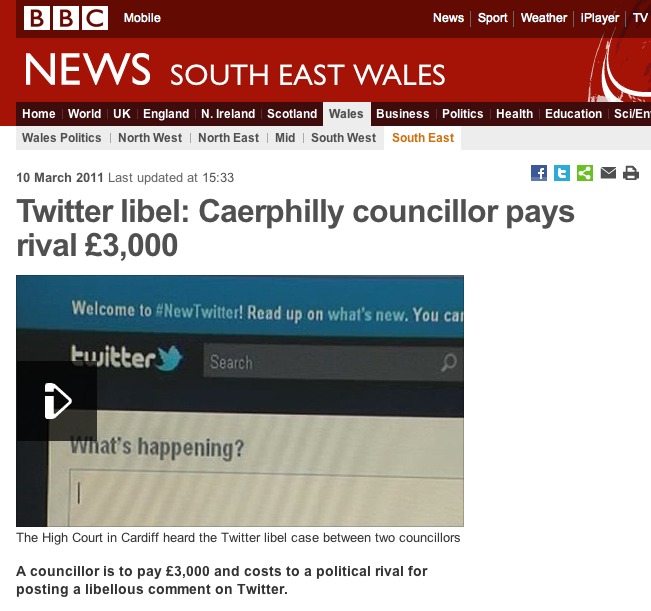
Whilst Facebook with its 500Million members is the best known social network, the importance of other sites such as Twitter and YouTube is not to be underestimated. Twitter’s attractiveness is in the opportunities it offers people to engage in conversations with brands, like companies or celebrities. These conversation need to be carefully conducted as they are publically visible, and can create embarrassement or even lead to libel action.  


Libel


Over the years, YouTube provides people and companies with new ways to entertain, inform and engage others with a brand or project. There are a large number of videos that have “gone viral” and thereby drawn a lot of attention not only to people, companies and events but also to the importance of social media as a new advertising tool. Amongst those viral videos that have been influential and have gone viral are entertaining/fun clips like Keyboard Cat, clips that customers of companies have produced after having had a bad service experience like United breaks Guitars, and YouTube Channels like the Uncultured Project that raise awareness as well as initiate and support campaigns in regions struck by disaster.

Over recent years, the importance of social media has further increased through the growing popularity of smart phones and other mobile devices. Jadis pointed at statistics that show the growth in mobile Internet traffic. For example, in 2010 the mobile data traffic was three times the size of the global Internet traffic in 2000. It is anticipated for the mobile data traffic to increase 26-fold between 2010 and 2015. These developments are being supported by the success of app-stores. 

Jadis who works for dottalent, an agency that helsps celebrities to use social media in an effective way, argued these developments are of importance for everybody. As people use social media they leave a digital footprint that is accessible by (potential) employers and customers. It therefore will become increasingly important to create one’s own digital footprint, or in marketing terms, to create a personal brand online, using tools like Twitter and LinkedIn. 


Relevant Literature (referred to by Jadis)

Anderson, Chris. The Long Tail: How Endless Choice is Creating Unlimited Demand. Random House Business Books. London, UK. 2006.

Cakin, IdilM.. Implementing Word of Mouth Marketing: online strategies to identify influencers, craft stories and draw customers.John Wiley & Sons. Hoboken, NJ, USA. 2010

Fraser, Matthew and SoumitraDutta. Throwing Sheep in the Boardroom: How Social Networking will Transform your Life, Work and World.John Wiley & Sons Ltd. Chichester, UK. 2008

Jarobe, Greg. YouTube and Video Marketing: an hour a day. Wiley Publishing. Indianapolis, India, USA. 2009.

Levy, Justin R. Facebook Marketing: Designing your next marketing campaign. Pearson Education Inc. USA. 2010.

Smith, Jon & Jose Llinares.Dominate your Market on twitter: Tweet your way to Business Success. The Infinite Ideas. Oxford. 2009

Shih, Clara. The Facebook Era: Tapping Online Social Networks to Build Better Products, Reach New Audiences and Sell More Stuff. Prentice Hall. London, UK. 2010.

Shirky, Clay. Here Comes everybody: The Power of Organizing without Organizations. Penguin Press, New York, NY. 2008.

Webber ,Larry. Marketing to the Social Web: how digital customer communities build your business. John Wiley & Sons. Hoboken, NJ, USA. 2009.


"Social Media and the New Economy" – talk by Rob Wilmot (BCS Digital)

Uncategorized

On February 4th, 2011, Rob Wilmot, Director of BCS Digital and Co-founder of Freeserve gave a guest lecture on “Marketing & New Technologies”, a module that I convene as part of the MSc International Marketing at King’s College London. In his lecture “Social Media and the New Economy” Rob provided a fantastic overview of the importance of Social Media to business and marketing as well as to Masters’ students who soon will go out and look for work.

Rob named 2009 as a watershed when Social Media turned from a fringe activity into becoming the mainstream. He names 4 events that pushed Social Media to the fore: (1) backed by a Facebook/Twitter campaign Rage Against the Machine ‘steal’ the Christmas No. 1 spot from the 2009 X-Factor Winner Joe McElderry, (2) on Christmas Eve, for the first time, Facebook had more site visits than Google US, (3) Pepsi pulls its adverts from the Superbowl in favour of a Social Media campaign, and (4) Barak Obama becomes President of the USA after an election campaign that made very effective use of Social Media. Since 2009, this development of the growing importance of Social Media for political campaigns and business activities has accelerated and spread into other areas, such as police investigations and professional football. New Social Media websites emerge all the time and the next big service/site following Facebook’s success is probably out there already (Rob Wilmot).

The spread of Social Media is closely monitored and investigated by commercial research institutes such as Forrester Research and the Altimeter Group. This research provides interesting insights into what Social Media people use – right now mainly Facebook and YouTube -, what kind of new Social Media services are currently emerging – right now, in particular Twitter – and what the demographics of Social Media users are. It also suggests that people use Social Media for different purposes and in different ways, and increasingly while being on the move rather than while sitting at a Desktop Computer.

For the “new economy” that is arising from these developments “recommendations” of products, services and websites are of particular importance. For example, with the deployment of ‘like’ and ‘share’ buttons “Facebook aims to become the authority for recommendation on the Internet” (Rob Wilmot). This development is highly relevant for all Social Media users as the effectiveness of recommendations is closely linked to the ‘trust’ people have in each other; “trust” being seen as the basis for the building of relationships.

Companies are well aware of the link between ‘recommendation’ and ‘trust’ and pay celebrities and Twitter users with large numbers of followers, fans and friends for recommending their products and services. For the rest of us, the link between ‘trust’ and ‘recommendation’ highlights the importance to take care when posting on Facebook, Twitter and other sites. In order to develop a reputation and to build trust it is critical not to post false, misleading, offensive etc. messages to Social Media sites: ”imagine your post is published on a billboard visible to everybody on the street” (Rob Wilmot).

The effectiveness of Social Media has been notoriously difficult to measure. The impact of wrong-footed Social Media campaigns such as those by Habitat (2010) and Kenneth Cole (2011) for the image of companies, are well reported. For the measuring of the Return on Investment (ROI) tools are developed by Forrester, Altimeter, Google and many others that provide information on the relationship between Social Media campaigns and monetary return. This information is critical to refine campaigns and continue to engage with customers. As Social Media continues to develop alongside more conventional marketing channels the instruments to measure their effectiveness in delivering ROI will be refined and further developed.


Kc

Social Media are not a magic wand that resolves all the problems marketing managers may have with building relationships with customers in an increasingly complex and competitive environment. However, they are a powerful additional channel marketing managers need to take seriously when developing campaigns and engaging with (potential) customers. Common-sense rules about the way in which to conduct communication are valid in Social Media just as in conventional marketing channels. However, Social Media fundamentally change the relationship between companies and customers: in particular, they facilitate conversations with customers and, if used in the right way, support the building of trust and long-term relationships with customers.

Rob’s lecture offered a wide range of information and insights on Social Media. He suggested that there is a growing field of research designed to support companies in developing Social Media campaigns and to asse
ss, evaluate and measure their (monetary) success or failure. It seems that whilst effective measures for the quantitative impact of Social Media campaigns are emerging, methods to be used for the assessment of qualitative aspects of the relationships between Social Media users are still underdeveloped.


Social_technographics_ladder


The lecture implied a range of possible research questions. The research the lecture has been based on, origins from studies conducted by research companies who aim to inform management practice and marketing strategies. Detailed academic research can contribute to this research by unpacking the concepts and foundations of relationships this research is pointing to. For example, the Social Technographics Ladder developed by Forrest Research (see Li & Bernoff 2008) creates a typology of people according to the ways in which they use Social Media tools, such a blogs, podcasts or RSS feeds. Little do we know of how people actually ‘read’ and ‘collect’ Social Media content, what resources they draw on and how they use these resources to create new content and new forms of content. 

Furthermore, much has been written about the importance of the building of relationships that often origin in ‘recommendations’ from “trust agents” (Brogan 2010). Yet, little do we know of what ‘recommendations’ are made up of, when do they arise and how are they designed in different situations and with regard to different products, services and people. How do long-term relationships and loyal customers of a company arise from a recommendation by a Social Media ‘friend’. ‘Relationship’, ‘loyalty, ‘trust’, ‘reputation’ and ‘recommendation’ in this context are often used as a generic concepts rather than as products of interaction between people. Little is known of the processes through which these ‘products’ of interaction are brought about.

Detailed studies of interaction between people, online and offline, and in particular between marketing practitioners (shop keepers, vendors, marketing managers, direct marketeers, customer service personnel, etc.) and customers will useful in helping to unpack generic concepts like ‘relationship’, ‘loyalty’ and ‘trust’. Furthermore, they can specify the social organisation of activities such as the ‘conversation’ between companies and customers or those activities described in debates about Social Media as ‘engaging’ and ‘recommending’.

With such complementing interests of research companies and academic scholars it would seem sensible to engage in joint research projects and programmes that aim to develop generic concepts and models whose components are well understood and specific that they can inform the Social Media activities of companies and customers.


Relevant References 

Anderson, Chris. 2006. The Long Tail. How endless choice is creating unlimited demand. Random House.

Brogan, Chris & Smith, Julien. 2010. Trust Agents: Using the Web to Build Influence, Improve Reputation, and Earn Trust. John Wiley & Sons.

Cellan-Jones, Rory. 2008. Freeserve and ten years of boom and bust. http://www.bbc.co.uk/blogs/technology/2008/09/freeserve_and_ten_years_of_boo.html 

Li, Charlene & Bernoff, Josh. 2008. Groundswell: Winning in a World Transformed by Social Technologies. Harvard Business Press.

Solis, Brian. 2011. Engage: The Complete Guide for Brands and Businesses to Build, Cultivate, and Measure Success in the New Web. John Wiley & Sons.

Tapscott, Don & Williams, Anthony. 2007. Wikinomics. How Mass Collaboration Changes Everything. Atlantic Books.


Rob Wilmot in the News

Google

The Guardian