This study explores how prison tourism experiences are co-constructed through situated visitor interactions. Penal heritage sites are decommissioned prisons, transformed into immersive educational attractions, drawing upon multiple interpretative practices to engage visitors with historic and contemporary issues of crime and punishment. Using ethnomethodological conversation analysis (EMCA), this research examines how gestures, talk, gaze and bodily position influence how visitors see, interpret, and emotionally negotiate difficult heritage. Findings reveal that visitors co-produce dark tourism experiences and negotiate the perceived darkness of sites through embodied practice. Situating visitors as active social agents, this study provides insights into the co-construction of dark tourism experiences, emphasising interpretation as an emergent process shaped by interaction rather than predetermined by site design or individual motivation.
Brigitte Biehl and I have continued our exploration of “atmospheres” by examining how spaces and their atmospheres are dynamically produced through people’s action and interaction. Our analysis is based on studies at a museum and a techno club that due to the global pandemic was transformed into an art exhibition. The research was published in the book “The Metamorphosis of Cultural and Creative Organizations” edited by Federica De Molli and Marilena Secco.
Atmospheres as dynamic configurations: The case of a museum and a techno club by Brigitte Biehl & Dirk vom Lehn
Abstract: Organizational spaces and museum exhibitions are often designed to encompass people with a given atmosphere that encourage particular behavioural and cognitive responses. In a leisure context such as techno clubs, people are given the opportunity to have experiences that are site-specific standing in a particular a nightlife tradition. Similarly, in museums people encounter objects and artefacts displayed to allow them to have an aesthetic experience. In our chapter, we will draw on Gernot Böhme’s aesthetic theory, developing his notion of atmosphere and aesthetic work. We explore how spaces and their atmospheres are dynamically produced through people’s action and interaction. Our investigation will consider atmospheres as ongoing, as continually produced and transformed through people’s “aesthetic work”, i.e. actions, movements, and embodied interaction influenced by their moods, emotions and energy, as well as their memories and past experiences. Based on our analysis we will argue that leisure and cultural experiences arise within the spaces and atmosphere that people co-create through their presence and activities. We draw on examples from the cultural and creative industries: the Victoria and Albert Museum in London and Berghain techno club in Berlin, which during the global pandemic in 2020 was transformed into an art exhibition “Studio Berlin” in co-operation with Boros art foundation.
Table of Contents
Preface Antonio Strati
1. Cultural and creative organizations’ space: An introduction
Federica De Molli and Marilena Vecco
Part I – Aesthetic
2. Atmosphere in cultural organisations: A circumplex model of affective atmospheres
Christian Julmi
3. Atmospheres as dynamic configurations: The case of a museum and a techno club
Brigitte Biehl (Biehl-Missal) and Dirk vom Lehn
4. Creative spaces in higher education
Tatiana Chemi
5. ‘Being t/here apart-together’: Co-creative work(ing) in bodily-digital ‘inter-places’
Wendelin Küpers and Stephan Sonnenburg
Part II – Symbolic
6. Organizational spatial transformation: The case of the un-festival
Grant Hall and Ruth Rentschler
7. The spatial production of festivals: Ritualization, liminality and performativity
Leonore van den Ende
8. Artistic space: Painting and the making of space
Eleonora Montagner and Alvise Favotto
9. Museum spaces and changes
Graham Black
Part III – Instrumental
10. Space technologies and cultural organizations
Daniel Ericsson
11. The regional context in entrepreneurial finance of cultural business: Urban versus rural space for creative and cultural entrepreneurship
Elmar D. Konrad and Max Höllen
12. Community-driven cultural spaces and the COVID-19 pandemic
Matina Magkou, Laura Huret and Vincent Lambert
13. The expansion of virtual spaces of superstar and star museums during the COVID-19 lockdown
Anne Gombault and Oihab Allal-Cherif
14. Future perspectives for research on creative and cultural sectors using a spatial approach
The College of Optometrists has recently launched a new online course on communication skills in optometry. The course, open to members of the College of Optometrists only, is aimed at newly qualified members and those returning to work. It will take participants through the stages of an eye examination and look at ways to improve communication skills. One non-interactive CET point is available and communication and standards of practice competencies are covered.
Good communication can increase patient confidence in your knowledge and skills and result in greater patient satisfaction. It can also lead to more accurate test results and improved compliance with treatment plans.
In this course you will cover the key stages of the eye examination:
· meeting the patient
· understanding patients’ concerns
· carrying out clinical tests
· delivering findings
· ensuring patient compliance
· patient-centred care.
Activities are followed by hints and tips sections on open and closed questions and active listening.
This course is based on the results of research projects undertaken by King’s College London, the Institute of Education and the College of Optometrists from 2009 onwards. The projects investigated how optometrists conduct eye examinations and how their findings were communicated to patients.
In den vergangenen 10 Jahren sind verschiedene Texte zur Analyse von Interaktion erschienen, in deren Zentrum Videoaufnahmen als Daten stehen. Von besonderer Bedeutung sind in diesem Zusammenhang Texte, die sich auf die Ethnomethodologie und Konversationsanalyse stützen. “Ethnomethodologische Interaktionsanalyse” schließt hier und an mein Buch zu Harold Garfinkel an, in dem ich die Entwicklung der Ethnomethodologie als besondere soziologische Einstellung nachzeichne.
“Ethnomethodologische Interaktionsanalyse” bettet die Analyse von Interaktion auf Basis von Videoaufnahmen in den Kontext der Entwicklung der Ethnomethodologie ein und führt die Analyse am Beispiel von Daten, die ich in den Untersuchungsräumen von Optometrikern aufgezeichnet habe, vor. Dabei gehe ich auf Praktikalitäten der Datenerhebung und -analyse und die Transkription von Videodaten ein. Anschließend wendet sich das Buch der Darstellung von Analysebefunden in Live-Präsentationen und in Texten zu. Das Buch ist in der Serie ‘Standards standardisierter und nicht-standardisierter Sozialforschung’, die von Nicole Burzan, Ronald Hitzler und Paul Eisewicht herausgeben wird, bei Beltz/Juventa erschienen. “Ethnomethodologische Interaktionsanalyse” ist als Kindle-Buch und vom 20. August 2018 auch in der gedruckten Version erhältlich.
Together with Saul Albert I am currently working on video-data collected at Lindy Hop Dance workshops for beginners. Our interest is in the nexus between the body and the social, that for long have been kept separated in sociology. In July 2017 we presented a paper titled ‘Beginning to Dance: methods of mutual coordination between novice dancers‘ at the Joint Action Meeting (JAM) held at Queen Mary’s University London. The paper explores how novice dancers are able to make a first step in step with a dance partner, with the rhythm of the music and with the other dancers. Analytically and methodologically the paper draws on ethnomethodology and conversation analysis and the more recent development of video-analysis of interaction (Heath, Hindmarsh & Luff 2010) as well as from the fabulous analysis of Lindy Hop dance lessons by Leelo Keevalik.
Further information information about the project is on Saul’s website on Dance as Interaction.
Albert, S. (2015, June). Dancing through time and space. Paper presented at Revisiting Participation: Language and Bodies in Interaction, Basel.
Albert, S. (2014, June). Interactional resources and their use in learning the Lindy Hop. Paper presented at the 6th Ethnography and Qualitative Research Conference, Bergamo.
Albert, S. (2014, June). Interactional choreography. Paper presented at the 1st EMCA Doctoral Network Meeting, Edinburgh.
Over the past few decades there have been tremendous developments in audience research. Sonia Livingstone’s (2014) book chapter captures some the highlights of these developments. Unsurprisingly, Livingstone’s chapter includes Stuart Hall’s ‘encoding/decoding’ model that has been of outstanding influence in the field. Hall’s concept is closely related to ‘reception theory’ (Iser 1980) and Morley’s (1993) concept of the “active audience”. By and large, when audience research discussed the active audience it was turning away from the idea that media content was passively received by a people sitting in front of their radio and television set. The focus shifted from passive reception to (active) interpretation of media content.
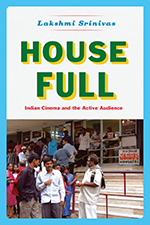
A couple of years ago I came across articles published by the Indian-American scholar Lakshmi Srinivas based at the University of Massachusetts Boston. Srinivas research (2005, 2010ab) immediately struck me as very exciting as it took the ‘active’ in ‘active audience’ literally. She was and remains interested in people’s action and interaction when they visit cinemas. Last year (2016), Srinivas published her research as a book entitled “House Full: Indian Cinema and the Active Audience“.
In the book, Srinivas discusses how in India people actively participate in the production of the cinematic experience. She begins her exploration outside the cinema hall where people queue to purchase tickets and wait to enter the auditorium. Inside the auditorium a social structure emerges that can be based on people’s social class but is also related to the nature of the social grouping that attendance a film screening. Where they sit people create a space where all group members can comfortably participate in the film experience. Children for example may sit on prepared blankets and consume food that has been brought to the cinema. During the film it is very common to vocalise loudly responses to the film’s content, such as to locations or actors that are recognised. People also sing along to tunes that are part of the film. Or if they are not interest in long musical sequences they might use the time to chat with others, leave the cinema for socialising outside, or having a smoke. Whilst in Western cinemas it is generally assumed that everybody sitting in the same auditorium sees and experiences the same film, audience members in Indian cinemas construct their cinematic experience in interaction with others and by fitting together the bits of the film they see with content they pick up from conversations with others.
Livingstone, Sonia (2012) Exciting moments in audience research – past, present and future. In: Bilandzic , Helena, Patriarche, Geoffrey and Traudt , Paul, (eds.) The social use of media: cultural and social scientific perspectives on audience research. ECREA Book Series. Intellect Ltd, Brighton, UK, pp. 257-274.
There is a renewed interest in museum visiting and the practices of doing so. Only this weekend (October 9th, 2014), Stephanie Rosenbloom published an article in the New York Times that explores “The Art of Slowing Down in a Museum“. Rosenbloom refers to Daniel Fujiwara’s (now Director at SImetrica) study of the impact of museum visiting on people’s enjoyment of life as well as on James O. Pawelski’s work in the area of positive psychology. All these studies are of great interest and very helpful in highlighting the impact of the arts on people’s lives. It would be great if such research that is primarily interested in measuring impact and focuses on individuals as experiencing subjects, would include also the influence of the presence of other visitors in museums, both companions and others. It would seem that in order to follow the arguments and suggestions on how to organise a museum visit would require prior negotiation with those we are with in a museum. Statistics of museum visiting clearly show that people not only primarily come with others to museums but also that one main reason for the visit is socialising and interacting with others, whereby works of art (and other exhibits) providing hubs for concerted activities.
Considering that Pawelski, Fujiwara and others show that spending more time with a work of art increases feelings of happiness and satisfaction and that people enjoy interacting with others in museums, exploring how we can facilitate sustained social activities around works of art and other exhibits in museums seems to be an obvious avenue to pursue.
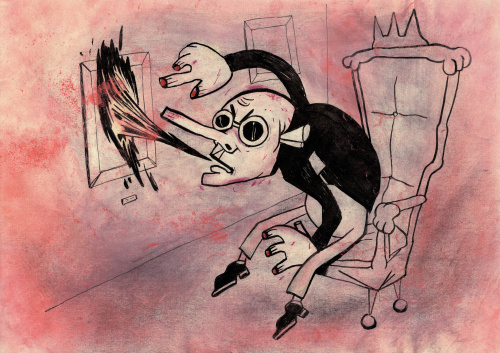
The blind fingerless art critic by Flickr user Shareheads CC-BY 2.0
I have a confession to make: art critics baffle me. Especially when they venture to make grand pronouncements about the right way to go about experiencing art in museums. So when I saw the title of Philip Kennicott’s piece in the Washington Post, titled “How to view art: Be dead serious about it, but don’t expect too much” I will confess that I died a little bit inside. “Sigh. Another ‘you people are doing it all wrong’ piece.” Just what the world needs, another art critic holding forth on the sad state of museums and museumgoing. But, though there is plenty of sneering, there’s also a lot worthy of discussion. And debate. Kennicott’s post didn’t stand alone too long before Jillian Steinhauer posted a reply at Hyperallergic, and Jen Olencziak a rebuttal at Huffington Post. So, let’s take a…





 Interaction, Organisation & Technology